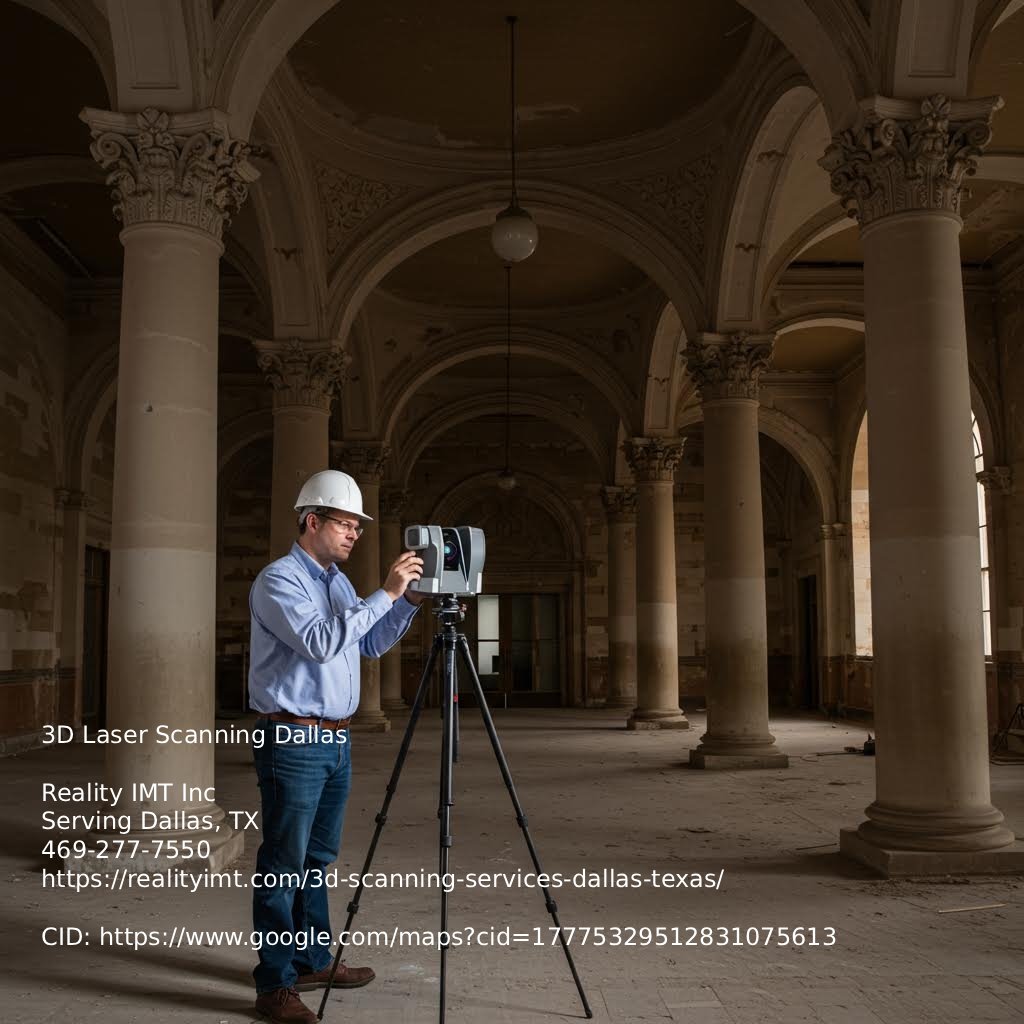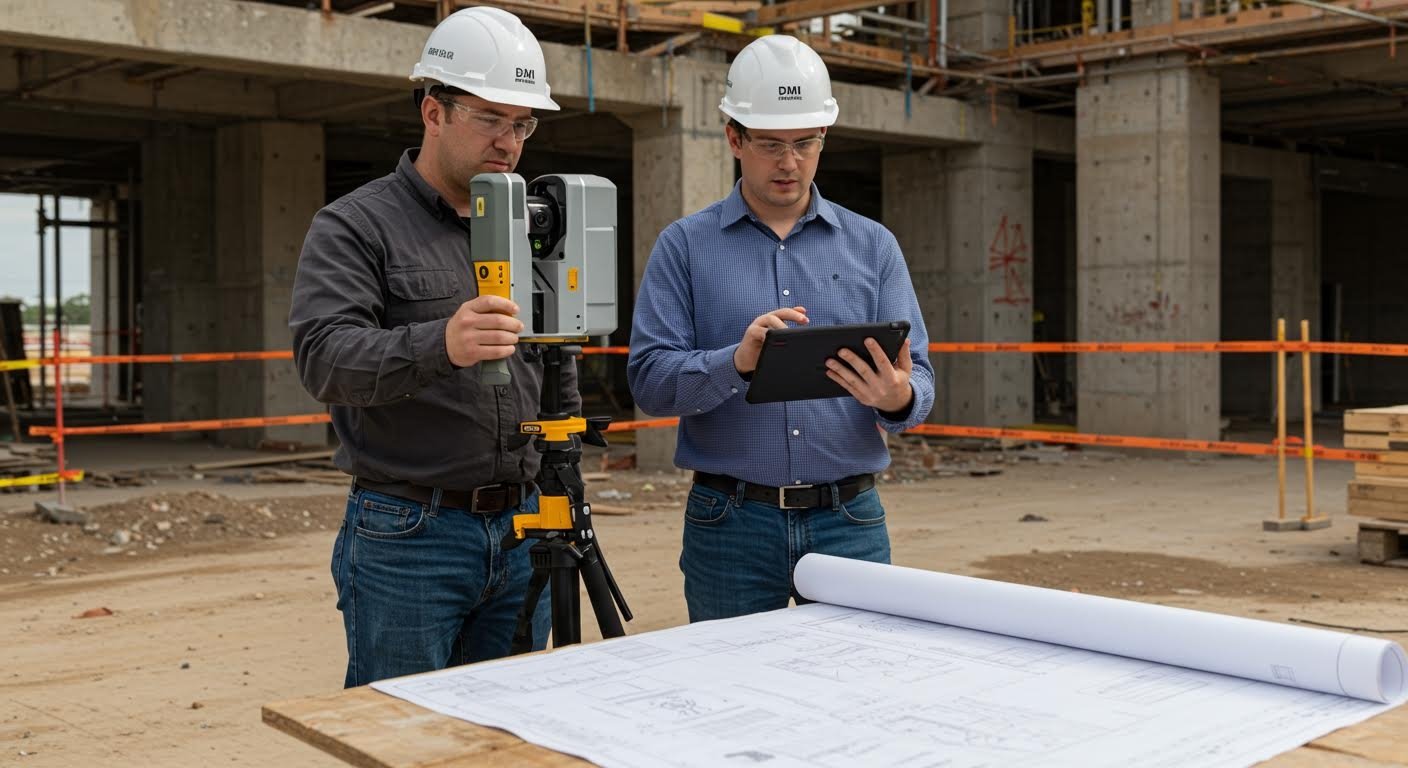
3D laser scanning captures the exact dimensions of a space by using lasers to record millions of data points. It creates a precise digital copy, called a point cloud, of buildings, rooms, or entire facilities. This helps in commercial settings where accuracy matters—like office buildings, warehouses, and hospitals in Dallas being renovated or documented for maintenance.
In commercial construction, having accurate as-built data helps avoid costly mistakes. Let’s break it down. Say you're planning HVAC upgrades in a Dallas office tower. If you need accurate site data for your next project 3D laser scanning services Dallas delivers high-precision models that help reduce errors and streamline project workflows.. Relying on old drawings won’t cut it. Scanning gives you real measurements. It’s faster than manual methods and picks up details like bowed walls, ceiling heights, and existing MEP layouts that traditional surveys often miss.
Scans use tripod-mounted terrestrial laser scanners that rotate and fire laser pulses hundreds of thousands of times per second. Crews place the equipment in several spots to cover the entire space. Then they stitch the point clouds together into a 3D model. Turnaround can take just a few days, depending on the site’s size and the data’s clarity.
Here is why it matters. Dallas developers, engineers, and facility managers can cut down on change orders, reduce site visits, and improve coordination between trades. But the data must be accurate. Misaligned scans or missed areas can lead to design errors. That’s why experience with commercial spaces—not just homes—makes a big difference.
In Dallas commercial projects, precision in 3D laser scanning keeps design, construction, and operations on track. Whether you're updating an office tower in Uptown or managing a multi-tenant site near I-35, accurate as-built data sets the stage. Even a small error can lead to misaligned HVAC systems, clashing structures, or MEP reroutes that waste time and money.
Design teams need precise point clouds to model existing conditions. Without them, they’re guessing—and that gets expensive. A 1-inch ceiling height error might seem minor, but it can throw off prefabricated parts or fire suppression systems. That leads to change orders, delays, and unhappy clients.
Facility managers also count on this data for long-term planning. Say you're prepping a 30,000-square-foot office for a new tenant. If the scan is off, you risk mismatched walls or misplaced utilities. Fixing those after construction starts costs far more than getting the scan right upfront.
In Dallas, where real estate moves fast, accurate scans help avoid rework and keep projects on schedule. Bad data means resurveying or redesigning—and that’s rarely cheaper than doing it right the first time.
Resolution shows how finely the scanner captures surface details. In commercial offices, higher resolution helps capture small features like molding, conduit paths, or HVAC registers. Low resolution can miss or distort these, causing rework. In Dallas, where ceiling systems, wall partitions, and MEP components vary, good resolution matters. Match resolution to the goal—floor plans need less detail than MEP coordination. Too much resolution increases file sizes and slows processing.
This measures how accurately the scanner records distances. It matters for scanning large spaces like open offices or atriums. In Dallas buildings with open layouts or tall voids, poor range precision can distort walls or ceilings. Many scanners offer millimeter-level accuracy, but lighting, reflectivity, and calibration still affect results. Check specs and run on-site test scans before trusting long-range data.
Point density shows how many data points the scanner collects per area. More points give better surface detail for modeling and clash checks. But denser clouds need more storage and processing power. Use higher density in tight areas like utility closets or ceiling plenums. For open lobbies or floor plans, lower density works. Choose density based on the task to avoid wasting time and resources.
When combining scans, registration error shows how well they align. In buildings with many rooms or levels, you’ll need many scan positions. If alignment is off by more than 5mm, walls or pipes may not line up. That causes problems in BIM modeling or prefabrication. In Dallas, older buildings often have irregular layouts, so tight registration is key. Use survey points or targets to improve alignment during post-processing.
Tolerance shows how much deviation from real dimensions is acceptable. In renovations, you often need accuracy within a few millimeters. If a wall is off by half an inch, cabinets or prefabricated parts may not fit. Engineers and facility managers in Dallas rely on tight tolerances to avoid delays. Check the scanner’s specs and workflow to meet your accuracy needs. Don’t assume all scanners meet the mark.
In commercial projects across Dallas, the type of 3D laser scanner you choose affects the accuracy of your as-built data. Not every scanner fits every job. Time-of-flight scanners work well for large areas because they capture data from long distances, sometimes several hundred meters. But they lose some accuracy compared to other types. If you're documenting a detailed MEP system in a mechanical room, that might not work.
Many people think higher resolution means better accuracy, but that’s not always true. Resolution affects point cloud density, not measurement accuracy. Misalignment, poor registration, or using the wrong scanner can lead to bad models. That costs time during design or clash detection. Here is why choosing the right equipment matters—it keeps your renovation or construction plans in Dallas on track.
Phase-shift scanners are faster and more precise at close range, often within 1–3 millimeters. They suit indoor commercial office spaces where tight tolerances matter—like ceiling grids, ductwork, or built-in millwork. Their range is limited, so they’re not ideal for full-building exteriors or large warehouses.
LiDAR works in both terrestrial and mobile scanning setups. It helps when you need to scan active spaces without stopping operations. Mobile LiDAR scans while walking or driving. It’s quicker, but usually less accurate than static setups. Expect 2–5 cm accuracy, which works for general layouts but not for detailed coordination drawings.

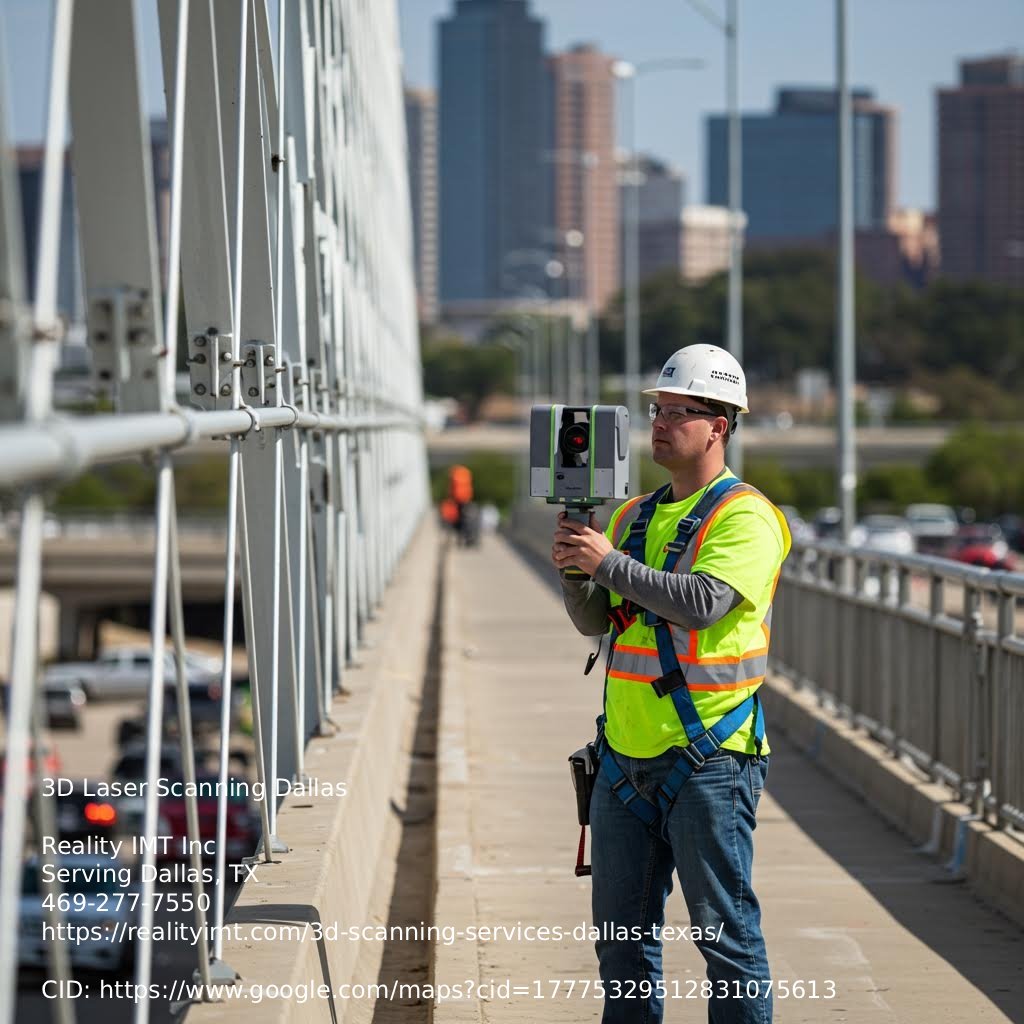
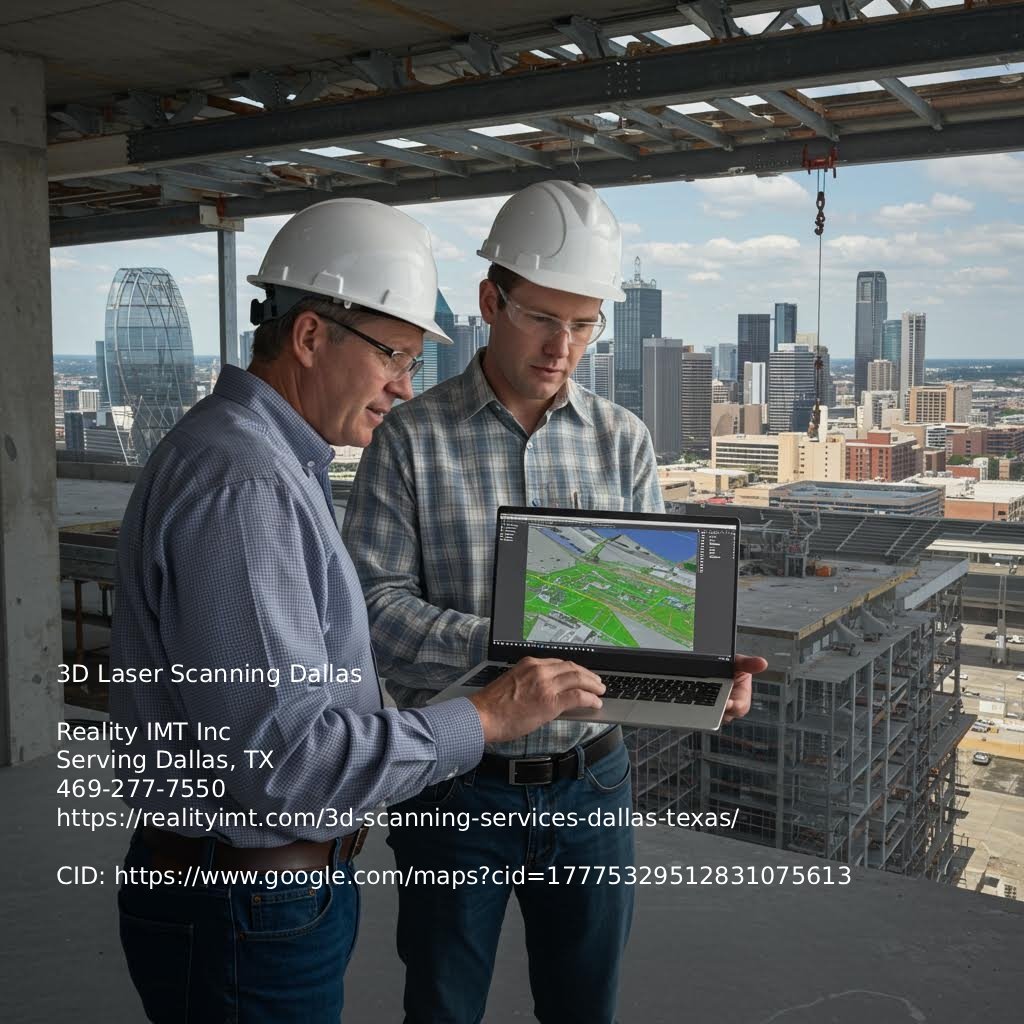
Commercial 3D laser scanning in Dallas brings a few location-specific challenges that can affect accuracy if you’re not careful. First, the climate. Dallas gets a lot of heat and sunlight, especially in summer. High temperatures can cause thermal expansion in building materials, which may lead to small distortions if scans happen during peak heat without adjustments. Sunlight can also interfere with the laser when scanning reflective surfaces. If you're working with glass curtain walls or polished metal finishes, common in commercial buildings, plan for early morning or cloudy conditions to reduce glare and signal noise.
Next, consider building materials. Many commercial buildings in Dallas use a mix of concrete, steel, glass, and composite panels. Each material reacts differently to laser scanning. Matte concrete scans well. Polished metal or glass? Not as well. You may need to use targets or apply temporary matte coatings when accuracy matters.
Tight spaces also matter. In downtown Dallas, many renovations happen in older buildings with limited access and cramped mechanical rooms. That can block the scanner’s line of sight and make full capture harder. You’ll need multiple scan positions and careful registration.
Here is why this matters: if you scan a commercial site in Dallas, adjust for heat, reflections, and tight spaces. Skip those steps, and your as-built data might look fine at first—but cause problems later during renovation or MEP coordination.
For commercial 3D laser scanning projects in Dallas, especially in office buildings or mixed-use spaces, accuracy starts with proper scanner setup. Place the tripod on stable ground, level the scanner, and ensure a clear line of sight. Skip this, and the entire dataset can be off. You’re not just collecting points—you need them in the right place with the right overlap.
Next, verify in the field. Don’t just scan and leave. Measure known distances like door widths, ceiling heights, and column spacing. Then compare them to the point cloud. Even a half-inch error can cause issues when planning MEP systems or retrofits in tight spaces.
Registration matters too. In large commercial spaces, where you stitch together many scans, errors can add up fast. Use targets or cloud-to-cloud methods, and always check residual error values. Keep the RMS error under 0.05 feet for reliable as-builts.
Now check your work. Review scan coverage, look for shadow zones, confirm registration, and compare with CAD or BIM files. If the scan doesn’t match the design or field conditions, it can delay coordination and construction. Engineers and facility managers need accurate data to plan upgrades. Bad scans waste time.
Here’s the takeaway: accuracy doesn’t happen by accident. It takes solid field work, constant checks, and careful processing. Otherwise, you’re just collecting nice images with no real use.
In Dallas, commercial renovation projects depend on accurate 3D laser scanning. Take office build-outs in downtown high-rises. Many of those buildings went up decades ago. Original plans are often outdated or missing. When contractors arrive to change floor layouts or reroute MEP systems, they need exact as-built conditions. Scanning delivers that. It captures every wall, pipe, and beam down to the millimeter. Without it, teams risk building on bad assumptions. That leads to delays, change orders, or structural conflicts once construction begins.
In older industrial buildings, accuracy matters even more. In a recent retrofit at a manufacturing facility near Irving, engineers used 3D scans to map existing ductwork and piping before adding new systems. The space was tight. Any measurement errors would have caused rework or forced them to tear out new installations. The scan data gave them a precise digital model to plan around. It saved weeks and avoided field clashes.
Historic preservation also demands precision. A project in the Bishop Arts District involved restoring a 1920s building while keeping original architectural elements. The structure had shifted over time, so tape measurements wouldn’t work. Laser scanning captured the warped geometry and sagging floors exactly as they were. That let architects design reinforcements that matched real conditions, not idealized drawings.
Here is why this matters: if you're working with bad data, you're guessing. And guessing doesn't cut it when you're cutting concrete or preserving century-old brick. Accurate scans cut risk. Simple as that.
Accuracy needs in commercial 3D laser scanning vary by industry. In Dallas, different professionals use the data in different ways, and the acceptable error depends on the task.
Architects working on office retrofits or tenant improvements need millimeter-level accuracy for walls, ceiling heights, and structural features. Even a small error can disrupt the design, especially when fitting new systems into older buildings. Engineers, especially MEP and structural, rely on exact measurements to plan around existing systems. HVAC routing, for example, needs precise clearance. A 1-inch error can cause rework, delays, or clashes during construction.
Facility managers often don’t need that level of detail. They use scans for asset records, space planning, or maintenance. In those cases, centimeter-level accuracy usually works. What matters most is that the data stays consistent and easy to access, especially in large buildings.
Developers and owners focus on usable square footage, ceiling heights, and layout. These details affect leasing and value. Here is why accuracy counts: small errors add up fast across large spaces.
One common mistake is skipping the step of defining accuracy needs before scanning. That can lead to paying too much or getting data that doesn’t fit the project. In Dallas, where many buildings lack reliable plans, setting clear expectations early makes a big difference.
Accurate laser scans set the stage for digital modeling in commercial construction. If you're working on a renovation or retrofit in Dallas, solid as-built data from 3D scanning gives your BIM and CAD models the right geometry from the start. That cuts guesswork and avoids expensive rework when parts don’t fit due to bad measurements.
In older commercial offices, architectural drawings are often missing or outdated. 3D laser scanning captures the building’s current state with millimeter accuracy. That data flows into Revit or AutoCAD, giving architects and engineers a reliable base. Let’s break it down. For MEP systems, accuracy matters. Misaligned ducts or pipes can delay schedules. Good scan data helps trades coordinate more clearly.
Digital twin tools also depend on accurate scans. If the input is off, the model won’t help. Facility managers in Dallas use this data to track changes, plan upgrades, and manage assets. Bad scans cause errors that spread through the model’s entire life.
Here is why that matters. Many assume any scan will do. But noisy point clouds, misalignment, or missing data slow everything down. It pays to work with scanning teams who know how to set control points, adjust resolution, and register scans correctly. That’s how you get data that actually supports your project—not just nice visuals.
If you're hiring a 3D laser scanning provider for a commercial project in Dallas, focus on accuracy. Ask what level of precision they usually deliver. For commercial office spaces, they should hit within ±1/8 inch or better. If they can’t back that up with documentation, keep looking. Bad scans can throw off walls, ceilings, and MEP layouts. One mistake can delay the entire renovation.
Experience counts, but not just in years. Ask what types of buildings they’ve scanned. A team with experience in multi-story offices or industrial sites in Dallas will know how to deal with reflective surfaces, tight mechanical rooms, and complex ceilings. Someone who mostly scans houses likely won’t be ready for that.
Next, ask about their equipment. Are they using phase-based or time-of-flight scanners? Do they use terrestrial scanners like the Leica RTC360 or Faro Focus? You don’t need to know every spec, but you do need to know if their gear fits your project’s size and accuracy needs.
Finally, check their files. Ask for samples. Are the point clouds clean? Are the Revit models full of errors? A good provider gives you files your design team can use right away. If you have to spend weeks fixing their work, you're wasting time and money.
In commercial projects across Dallas, teams often use 3D laser scanning to answer one question: Is the data accurate enough for real-world construction? Accuracy depends on the scanner, setup, and site conditions. Most high-end terrestrial scanners used today hit 2–4 millimeters. That works for architectural planning, MEP coordination, and clash checks—but only if the scan is done right. Poor targeting, bad registration, or scanning through glass can cause errors.
Timelines depend on the site. A single-floor office might take less than a day. Larger or active sites take longer, especially with limited access or after-hours scanning. Processing and registration usually take 2–3 days. It can take longer if the data needs a lot of cleanup.
Results vary. Some want raw point clouds. Others ask for 2D CAD drawings or 3D Revit models. Most Dallas firms request a registered point cloud and a simple model. Some also want full MEP layouts, ceiling plans, or clash reports. Make sure to confirm this before scanning. Changing the scope later can slow everything down.
The data usually goes into BIM workflows. Architects overlay it in Revit. Engineers check pipe runs or duct clearances. Contractors compare it to shop drawings. If the scan isn’t accurate or aligned with the project’s coordinates, expect delays. Always confirm alignment early using control points or survey data.